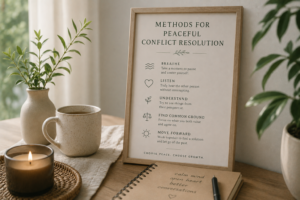
When parenting plans and court orders shape your family life, conflicts can feel overwhelming. I understand how challenging it is to navigate disagreements while keeping your children’s best interests at heart. That’s why mastering calm conflict resolution methods is so important. These methods help you communicate clearly, reduce tension, and find solutions that work for everyone involved.
In this post, I will share practical steps and gentle techniques to help you handle conflicts with confidence and care. You will learn how to stay calm, listen actively, and work towards peaceful outcomes. Let’s explore how you can create a more harmonious co-parenting experience.
Understanding Calm Conflict Resolution Methods
Calm conflict resolution methods focus on managing disagreements without escalating emotions. They encourage respectful dialogue and cooperation. When you use these methods, you create space for understanding and compromise.
Here are some key principles:
- Stay calm and composed: Take deep breaths and pause before responding.
- Listen actively: Show you are paying attention by nodding or summarising what you hear.
- Speak clearly and kindly: Use “I” statements to express your feelings without blaming.
- Focus on the issue, not the person: Avoid personal attacks or bringing up past grievances.
- Seek common ground: Look for solutions that benefit your children and both parents.
For example, if you disagree about a holiday schedule, instead of arguing, try saying, “I feel worried that the current plan might be confusing for the kids. Can we explore a schedule that works better for everyone?” This approach invites collaboration rather than conflict.
Practical Steps to Apply Calm Conflict Resolution Methods
Applying calm conflict resolution methods takes practice, but it becomes easier with time. Here are some actionable steps you can start using today:
- Prepare mentally before discussions Take a moment to centre yourself. Remind yourself that the goal is to support your children’s well-being.
- Set clear boundaries Agree on times and places to discuss sensitive topics. Avoid talking when emotions are high.
- Use neutral language Replace words like “always” or “never” with specific examples. This reduces defensiveness.
- Ask open-ended questions Encourage dialogue by asking questions like, “How do you think we can make this work better?”
- Take breaks if needed If the conversation becomes heated, suggest pausing and returning later.
- Document agreements Write down any decisions made to avoid misunderstandings later.
By following these steps, you create a respectful environment where both parents feel heard and valued.
How to Manage Emotions During Conflict
Emotions can run high when discussing parenting plans or court orders. Managing your feelings is crucial to keeping conversations productive.
Here are some tips to help you stay grounded:
- Recognise your triggers
Notice what phrases or topics make you upset. Awareness helps you respond calmly.
- Practice deep breathing
Slow, deep breaths can reduce stress and clear your mind.
- Use positive self-talk
Remind yourself, “I can handle this calmly” or “Our children deserve peace.”
- Visualise a peaceful outcome
Imagine the conversation ending with mutual respect and understanding.
- Seek support if needed
Talking to a trusted friend or counsellor can help you process emotions.
Remember, managing your emotions doesn’t mean ignoring them. It means acknowledging feelings without letting them control your actions.
The Role of Mediation in Calm Conflict Resolution Methods
Sometimes, despite your best efforts, conflicts remain difficult to resolve. This is where mediation can be a valuable tool. A neutral third party helps both parents communicate and find workable solutions.
Mediation offers:
- A safe space to express concerns
- Guidance to focus on children’s needs
- Assistance in creating or modifying parenting plans
- Reduced stress compared to court battles
- Cost-effective and timely resolutions
If you want to explore peaceful conflict resolution through mediation, professionals can support you in navigating complex issues with care and respect.
Mediation is not about winning or losing. It’s about working together to build a cooperative parenting relationship that benefits your children.
Building Long-Term Peaceful Co-Parenting Relationships
Mastering calm conflict resolution methods is just the beginning. Building a long-term peaceful co-parenting relationship requires ongoing effort and commitment.
Here are some ways to nurture this relationship:
- Keep communication open and honest
Regularly check in about your children’s needs and schedules.
- Celebrate successes
Acknowledge when you both handle situations well.
- Be flexible and willing to adapt
Children’s needs change, and so should your plans.
- Focus on your children’s well-being
Let this be your guiding principle in all decisions.
- Seek help when needed
Don’t hesitate to use mediation or counselling to resolve new challenges.
By committing to these practices, you create a stable and loving environment for your children, even after separation or divorce.
I hope these calm conflict resolution methods help you feel more confident and peaceful in your co-parenting journey. Remember, every step you take towards understanding and cooperation benefits your children the most. You are not alone, and support is always available to guide you through this path.